Source Recyclable Paperboard Cake Box for Bakery, Retail, and Gifting
Find and compare 30 listings for Recyclable Paperboard Cake Box options tailored for bakery packaging, retail display, and gift presentation. Evaluate features like single or two-color printing, handle designs, and custom sizes to find the right fit for your food and household needs.
Key considerations
Products List


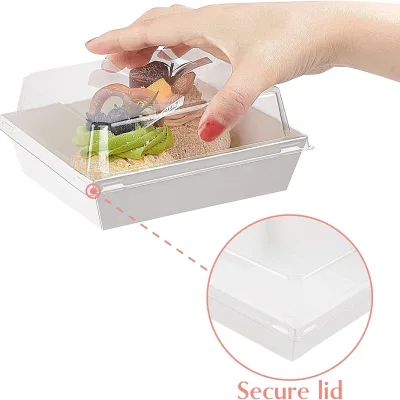
Cake Box Recyclable Food Grade White Kraft Paper Cupcake Dessert Cookie Boxes
$0.05 - $0.15
MOQ: 500 Pieces


$0.33 - $0.66
MOQ: 1000 Pieces


Customized Disposable Eco-Friendly White Cardboard Cake and Dessert Box
$0.02 - $0.05
MOQ: 30000 piece


Comprehensive Sourcing Guide
Recyclable Paperboard Cake Box Sourcing Guide
Sourcing recyclable paperboard cake boxes requires a nuanced understanding of material composition, structural integrity, and regulatory compliance. Buyers must navigate a market where "paperboard" is often used as a broad term encompassing corrugated board, kraft paper, and laminated materials. The primary objective is to secure packaging that protects delicate baked goods while meeting sustainability goals and food safety standards. This guide provides a structured approach to evaluating suppliers, verifying technical specifications, and managing commercial risks associated with this product category.
The procurement process involves balancing aesthetic customization with functional performance. While visual appeal drives brand recognition, the physical protection of the cake is paramount. Buyers should focus on suppliers who demonstrate clear traceability in their material sourcing and offer transparent quality control protocols. Understanding the interplay between box dimensions, weight capacity, and environmental conditions is essential for selecting the right packaging solution for specific distribution channels and end-use scenarios.
Product Scope and Observed Listing Signals
The observed market signals indicate a diverse range of materials and configurations available under the general umbrella of paper-based cake packaging. Listings frequently reference materials such as corrugated paper combined with brown kraft paper, as well as laminated materials involving paper and PET. This variation suggests that buyers must carefully distinguish between purely paper-based solutions and those with plastic laminates, as the latter may impact recyclability claims. The presence of specific product models like BLF-PBO383 and E65 highlights the importance of verifying exact product codes rather than relying on generic descriptions.
Customization is a prevalent feature, with many suppliers offering options for single or two-color printing, handle boxes, and various layer configurations. The observed data points to a wide range of sizes, from small portable cartons to larger custom dimensions, and weights under 0.5 kg. Buyers should note that while "recyclable" is a key attribute, the actual recyclability depends on the specific material blend and any applied coatings or laminates. It is crucial to verify whether the packaging is designed for single-use or if it supports multi-layer structures that might complicate recycling streams.
Technical Specifications to Verify
Dimensional accuracy and structural integrity are critical for ensuring that cake boxes fit standard display cases and withstand transportation stresses. Buyers should verify specific size parameters, such as the observed 2823(10+7)M configuration or standard 4-inch and 6-inch models, to ensure compatibility with their product lines. The box type, whether it is a handle box or a simple carton, must align with the intended user experience and handling requirements. Additionally, the single package size and weight limits should be confirmed to optimize shipping costs and storage efficiency.
Material thickness and layer composition directly influence the box's durability and moisture resistance. Suppliers may offer options ranging from single-layer cardboard to multi-layer constructions, which can affect the box's ability to support heavier cakes or resist humidity. Buyers should request detailed specifications on paper type, such as cardboard or kraft paper, and inquire about the presence of any internal coatings or liners. Verifying the exact material composition is essential to ensure that the packaging meets both functional requirements and sustainability commitments.
Compliance and Safety Documentation
Food safety is a non-negotiable aspect of cake packaging procurement, requiring strict adherence to relevant regulatory standards. Buyers must verify that suppliers hold appropriate certifications, such as FDA, LFGB, CIQ, or EU compliance, which indicate that the materials are safe for direct food contact. The observed data mentions certifications like CE/EU and EEC, which should be cross-referenced with the specific markets where the packaged goods will be sold. Ensuring that the packaging materials do not leach harmful substances into the food is a primary responsibility of the buyer.
Recyclability claims must be substantiated by clear documentation and compliance with local waste management regulations. Buyers should request evidence of the packaging's recyclability status, including information on how to properly dispose of or recycle the materials. This may involve verifying the presence of any plastic components, such as PET laminates, and understanding their impact on the recycling process. Suppliers should provide clear labeling guidelines and material safety data sheets to support the buyer's sustainability reporting and consumer communication efforts.
Cost Drivers and Commercial Terms
Pricing for recyclable paperboard cake boxes is influenced by several factors, including material costs, customization complexity, and order volume. The observed MOQ ranges from 1000 to 5000 pieces per design, indicating that smaller orders may incur higher per-unit costs due to setup and production inefficiencies. Buyers should negotiate based on their expected annual volume to secure more favorable pricing tiers. Additionally, the complexity of printing, such as two-color versus multi-color designs, can affect the final cost and should be factored into the budget.
Lead times and delivery terms are critical components of the commercial agreement. Suppliers may offer rapid delivery options, such as 48-hour dispatch after payment, or standard lead times of 10-15 days for production. Sample lead times of 3-5 days are common, allowing buyers to evaluate quality before committing to large orders. Buyers should clarify whether these lead times include shipping and customs clearance, especially for international orders, to avoid unexpected delays in their supply chain.
Supplier Qualification and Quality Control
Evaluating supplier qualifications involves assessing their manufacturing capabilities, quality control processes, and track record. Buyers should prioritize suppliers who have established internal quality control standards and can provide evidence of consistent product quality. The observed data mentions standard export carton packing, which suggests a level of professionalism in handling and shipping. However, buyers should verify the supplier's ability to maintain quality across large production runs and handle custom orders with precision.
Quality control checks should include inspections for material defects, printing accuracy, and structural integrity. Buyers may request pre-shipment inspections or third-party verification services to ensure that the delivered goods meet the agreed-upon specifications. It is also important to assess the supplier's responsiveness to issues and their willingness to provide replacements or refunds for defective products. Building a relationship with a reliable supplier who prioritizes quality can reduce risks and ensure a smooth procurement process.
Long-Term Procurement Checks
Sustainable sourcing practices require ongoing monitoring and evaluation of supplier performance and material innovations. Buyers should regularly review their suppliers' sustainability reports and certifications to ensure continued compliance with environmental standards. This includes verifying that the materials used remain recyclable and that the suppliers are adopting new technologies to improve the environmental footprint of their packaging. Engaging in long-term partnerships with suppliers who share sustainability goals can drive continuous improvement and innovation.
Market trends and regulatory changes may impact the availability and cost of recyclable paperboard cake boxes. Buyers should stay informed about developments in packaging regulations, recycling infrastructure, and consumer preferences for sustainable products. This proactive approach allows buyers to adapt their sourcing strategies and maintain a competitive edge. Regularly reassessing supplier relationships and exploring alternative materials or suppliers can help mitigate risks and ensure the long-term viability of the procurement strategy.
FAQs
What materials are used for the Recyclable Paperboard Cake Box?
The boxes are made from paper, corrugated paper, and brown kraft paper. Some variants also use laminated materials combining paper and PET. These materials ensure durability while maintaining eco-friendly properties suitable for food and household applications.
Can I customize the size and design of the cake box?
Yes, customization is available for size and design. The standard size is 28*23*(10+7)M, but you can request customized dimensions. Customization options include logo printing and specific color choices like white, pink, blue, or orange to match your brand identity.
What is the minimum order quantity for these boxes?
The minimum order quantity varies by design, typically starting at 1000 pieces per design. Some specific models may require a higher MOQ of 5000 pieces. Buyers should verify the specific MOQ for their chosen model before placing an order.
How long does it take to deliver the cake boxes?
Delivery takes 48 hours once payment is received for standard orders. Sample lead time is 3 to 5 days, while full product production requires 10 to 15 days. This ensures quick turnaround for urgent food packaging needs.
Which certifications do these paperboard boxes hold?
The products hold certifications including CE, EU, FDA, CIQ, LFGB, and EEC. These standards ensure the boxes meet international safety and quality requirements for food contact. They are suitable for use in food and gift packaging applications.
What printing options are available for the cake box?
Printing options include two-color printing and logo printing services. The boxes can be produced in various colors such as white, pink, blue, and orange. Customized printing allows for branding while maintaining the structural integrity of the handle box design.
Where are these recyclable paperboard cake boxes manufactured?
The boxes are manufactured in Guangzhou, Guangdong, China, and Qingdao, China. These locations serve as the primary production origins for the various models listed. Products are packed in standard export cartons for safe international shipping.